Many repurchase opportunities are already visible inside a dealership’s existing customer data, but sales teams often miss them because the signals sit across DMS, CRM, service, mileage and contract records. This article explains how Radar helps identify customers entering a buying window before they actively raise their hand. By monitoring signals such as lease maturity, mileage progression, repair patterns and service behavior, Radar helps teams prioritize high-potential customers, trigger relevant follow-up, and turn hidden lifecycle intent into measurable sales opportunities.
Disconnected tools across a dealer network can create a dangerous reporting mirage. Campaigns appear to run, leads appear to be followed up, and aftersales reminders appear to go out, but local workflows, definitions, and workarounds make results hard to compare. This article explains why the real cost of tool fragmentation is not just software waste, but uncertain decision-making. For CRM and Digital Transformation Leads, the challenge is to create shared execution logic across CRM, DMS, lead, campaign, and communication systems so dealer-level performance becomes visible, comparable, and actionable.
Most dealership leads are not ready for a sales conversation the moment they come in, but that does not mean they should be ignored or pushed into a manual follow-up process too early. This article explains how WEBSOLVE Flows helps dealerships nurture leads automatically through timely, personalized communication based on behavior, funnel stage, and engagement. By keeping prospects warm until real buying intent appears, dealerships can reduce pressure on sales teams, improve follow-up consistency, and protect the human touch for the moments where it has the greatest impact on conversion.
Dealer adoption rarely breaks at the training stage. It breaks later, when local managers have to translate central plans into daily work under real operational pressure. This article explores the missing middle layer between rollout and results: the dealership manager who decides what gets reinforced, what gets delayed, and what quietly drops away. It argues that adoption depends less on awareness and more on managerial feasibility. For NSCs and dealer groups, that means designing initiatives that fit local operating rhythms, reduce supervision overhead, and survive a difficult week in the dealership, not just a clean launch presentation.
Most dealership campaigns still rely on generic segmentation such as demographics or geography, but automotive relevance depends on the vehicle itself. This article explains why better campaigns start with car-level data like make, model, mileage, service history, warranty status, and contract timing. It shows how Reach helps marketing teams build more precise audiences directly from DMS and CRM data, making campaigns more relevant and more efficient. The piece also highlights how dealer groups and NSCs can balance central brand control with local campaign flexibility, improving both targeting quality and execution across the network.
This article challenges the way dealer networks judge campaign success. High open rates and click-throughs can create a false sense of confidence when the real issue is poor targeting or inconsistent execution across the network. In automotive retail, the better question is whether the right customer received the right message at the right moment, and whether that relevance survived local rollout. The post argues that marketing leaders should look beyond surface engagement and focus more on audience integrity, launch discipline, and follow-up consistency if they want campaign results they can actually trust.
This article argues that the quote is no longer just an administrative step, but a critical part of the buying experience. It shows how many dealer networks lose momentum when a ready-to-buy customer receives a PDF, spreadsheet, or stock link instead of a clear, professional next step. The piece explains why this creates both a conversion problem and a consistency problem across the network, then positions Quoto as a way to turn the quote into a branded, distraction-free experience with one vehicle, one offer, and one path to decision. The result is a smoother customer journey and stronger execution at scale.
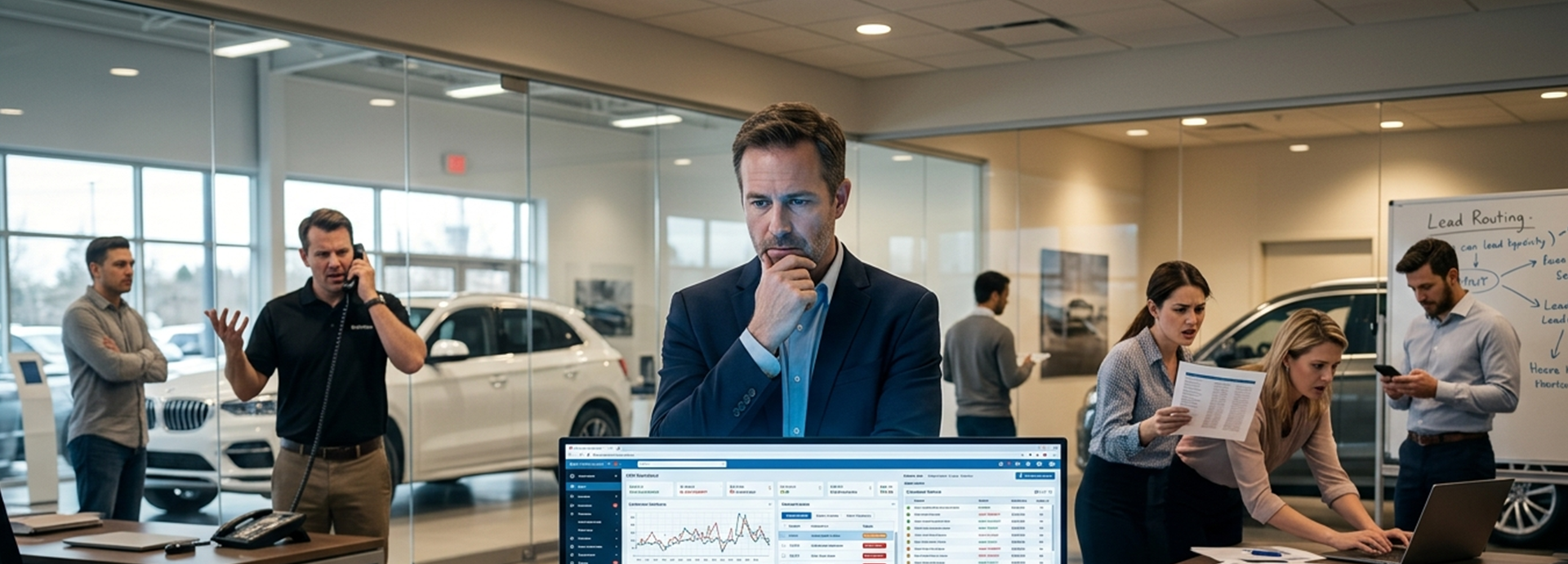
Dealership CRMs are overloaded with data, but that isn’t translating into better sales performance. As lead volumes increase, sales teams lose clarity, spending more time managing records than engaging real buyers. The core issue is structural: CRMs are designed for long-term relationship management, not high-speed lead qualification. In automotive, where customer journeys are non-linear and intent varies widely, this mismatch creates noise, slows response times, and reduces conversion. The solution is not more data, but a better operating model—one that separates rapid lead qualification from CRM-based relationship management, ensuring sales teams focus only on opportunities that truly matter.
Many dealerships still delay investment in aftersales retention because the workshop feels busy today. But that confidence can be misleading. As EV share grows, natural service demand is likely to become less frequent and less predictable, making retention more important than ever. This article explains why Pitstop matters now. By turning DMS, CRM, OEM, and third-party data into automated service reminders, warranty messages, recall alerts, and bookable workshop appointments, Pitstop helps dealerships protect future workshop demand and keep customers engaged through timely, relevant aftersales communication.
EVs do not just reduce traditional maintenance moments. They weaken the natural contact rhythm that kept customers connected to the dealer after the sale. This article argues that the real aftersales risk is not only lower workshop frequency, but the loss of relationship continuity, and that dealer networks must deliberately design new touchpoints to protect retention, relevance, and margin.
The WEBSOLVE blog delivers practical, no-nonsense insights for dealerships, NSCs, and OEMs looking to improve lead conversion, boost retention, and drive real business impact. We tackle the everyday challenges of automotive retail—from poor follow-up to loyalty drop-off—and translate them into clear, actionable strategies that save time and grow revenue. Every post is designed to help you do more with the data, systems, and teams you already have—smarter, not harder.
Privacy preferences: control over your data, completely in your hands