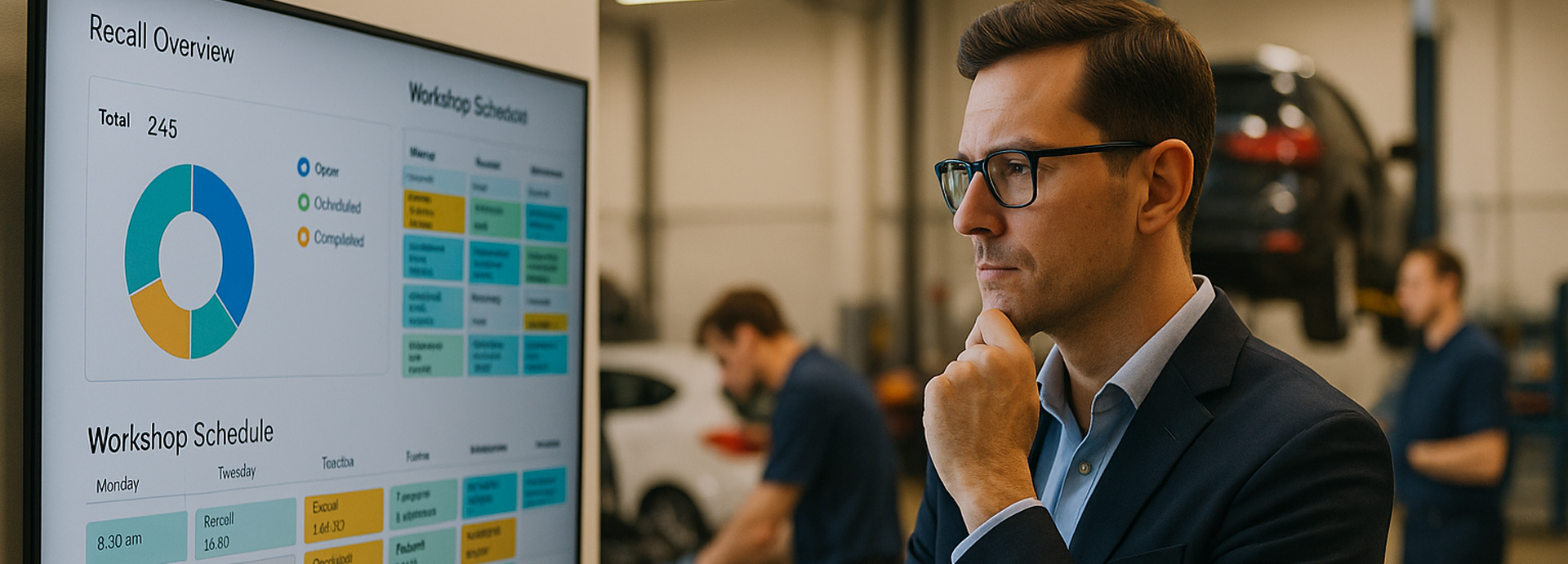
Most Aftersales Managers roll their eyes when recalls are framed as “loyalty opportunities.” When workshops are booked weeks ahead and technicians are already stretched thin, the last thing anyone wants is more low-margin work landing without warning. The truth is simple: recalls feel painful not because customers need help, but because the process overwhelms the dealership in unpredictable spikes.
Staggered outreach turns peaks into predictable flow
The turning point comes when recall outreach is automated and staggered. Instead of batch-calling every affected customer in the same week, communication flows in controlled waves aligned with actual workshop capacity. This spreads bookings naturally, protects your paid work, reduces overtime, and keeps your schedule stable. What once caused panic becomes a manageable, planned workload.
Real-time OEM data removes the daily firefighting
This only works when recall data arrives clean and on time. Automatic syncing with OEM or national recall databases eliminates the Excel chaos, the manual VIN matching, and the late lists that derail planning. You finally know what’s coming, and can pace your outreach instead of responding in crisis mode.
The recall visit is a valuable loyalty reset
Once the customer is in the bay, the opportunity becomes clear. Many recall visitors haven’t been back for years. They often have deferred maintenance, expiring service contracts, or tyres nearing replacement. Advisors rarely have the time to follow up, but automated aftersales flows do it for them: identifying needs, sending reminders, and keeping the customer connected long after the recall is done.
The sales upside: service loyalty fuels future purchases
There’s a second benefit dealerships often overlook. A customer who returns for a recall and experiences a smooth, professional process is far more likely to buy their next vehicle from the same retailer. The recall reopens the relationship; the aftersales experience strengthens it. With automated nurturing and buying-signal detection running in the background, sales teams can engage upgrade-ready customers at exactly the right moment, without adding pressure to the service department.
From disruption to strategic advantage
When recall communication becomes automated, paced, and connected to both planning and follow-up, the workshop stops drowning. The peaks disappear, the schedule stabilizes, and the dealership captures both the aftersales and sales potential hidden inside every recall visit.
Ready to see this working in practice? Book a demo with WEBSOLVE today.