Practical strategies for smarter funnels and stronger customer relationships.
The WEBSOLVE blog delivers practical, no-nonsense insights for dealerships, NSCs and OEMs looking to improve lead conversion, boost retention and drive real business impact.
EVs do not just reduce traditional maintenance moments. They weaken the natural contact rhythm that kept customers connected to the dealer after the sale. This article argues that the real aftersales risk is not only lower workshop frequency, but the loss of relationship continuity, and that dealer networks must deliberately design new touchpoints to protect retention, relevance, and margin.
Dealership events such as test drives, model previews, and workshop sessions often generate strong interest, but the real value lies beyond attendance. When events are managed with structured registration and capacity control, participation becomes a powerful marketing signal. Instead of treating all contacts the same, dealerships can segment customers based on their engagement with the event: those who attended, those who registered but did not show up, and those who ignored the invitation. This transforms events from simple promotional moments into actionable data that improves follow-up campaigns and targeting. By turning event participation into segmentation signals, marketing teams can run more relevant campaigns and drive stronger engagement across dealer networks.
Dealer networks frequently oscillate between tight central control and broad local autonomy. Both extremes create friction and execution drift. This article explores how to design minimum execution standards that protect customer experience and brand integrity while respecting dealer reality. It examines decision rights, governance clarity, and visibility as structural levers that enable consistency without micromanagement. Rather than increasing oversight, the solution lies in defining non-negotiables clearly and making execution observable. The piece offers a practical governance perspective for NSC and OEM leaders seeking stability across distributed retail environments.
Dealer networks often manage performance through averages and outcome metrics. But by the time KPIs decline, execution has usually been inconsistent for months. This article argues that central teams should focus on leading indicators of execution rather than lagging indicators of results. It explains how execution variance forms across dealers, why averages conceal spread, and how earlier visibility into behavior can prevent strategic drift. The piece reframes performance management as an observability challenge and offers a sharper diagnostic lens for NSC and OEM leaders responsible for network-wide outcomes without direct operational control.
Many dealer network strategies begin with strong alignment and clear intent. Yet months after launch, execution often drifts across regions and rooftops. This article examines the structural reasons why rollout plans fracture between central approval and local adoption. It explores how staffing pressure, operational constraints, unclear decision rights, and limited visibility into execution create divergence over time. Rather than blaming dealers or questioning strategy quality, the piece reframes rollout failure as a governance and execution design issue. It challenges central leaders to rethink how consistency is defined, observed, and supported across distributed automotive networks.
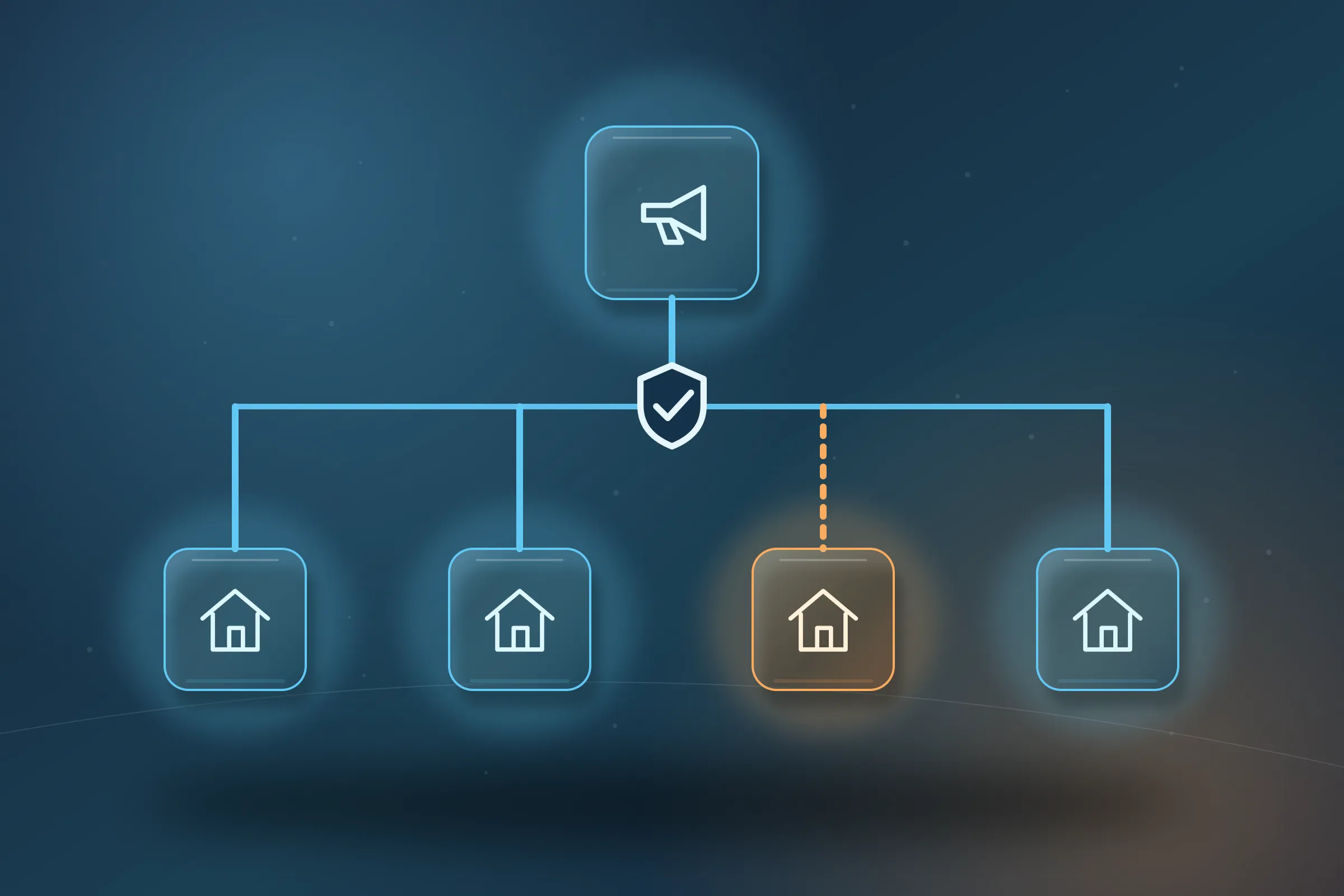
When national campaigns underperform, dealer networks often react by adjusting creative elements. Yet in many cases, the underlying issue is not the message but the governance behind the rollout. Campaigns in distributed dealer networks rely on consistent execution across locations, and small deviations in launch timing, targeting, or follow-up discipline can significantly distort results. Without visibility into whether minimum standards were met dealer by dealer, leadership risks misdiagnosing execution drift as a creative weakness. This article explores why campaign performance is often a governance question, and how stronger execution visibility leads to better decisions.
Dealer networks often look healthy when performance is measured by averages, yet still face hidden risks caused by uneven execution across locations. This article explains why execution variance is a structural problem rather than a people issue, and how it quietly undermines brand consistency and customer experience. It shows why customers notice inconsistency long before it appears in KPIs, and why managing outcomes alone is not enough. By focusing on execution visibility, clear standards, and early detection of drift, dealer networks can reduce risk, scale more reliably, and ensure strategy translates into consistent daily behavior.
Most dealer networks don’t suffer from a lack of first-party data, but from an inability to turn that data into consistent execution. Customer signals live across DMS, CRM, web, and call systems, yet remain fragmented across teams and tools. The result is disconnected actions that feel random to customers and inefficient for the network. Rather than adding another platform or campaign, the real lever is an operating model that makes data quality, decision-making, consent, and activation part of a repeatable weekly rhythm. In automotive, where data truth often lives in distributed dealer systems, predictable execution depends on connecting lifecycle signals to action at scale.
Dealer network strategies don’t fail because they’re flawed. They fail because execution at scale is harder than most organisations are prepared for. This article explores where execution breaks down and why visibility, governance, and consistency matter more than better plans.
About our blog
We tackle the everyday challenges of automotive retail, from poor follow-up to loyalty drop-off, and translate them into clear, actionable strategies that save time and grow revenue. Every post is designed to help you do more with the data, systems and teams you already have.
Recognise one of these challenges in your network?
A 30-minute conversation with a senior specialist.
Cookie preferences
We use essential cookies to run this site. With your consent, we also use Google Analytics to understand how visitors use the site and improve it. Analytics stays off until you turn it on, and you can change your choice at any time via Cookie preferences at the bottom of every page. Read more in our privacy statement.
Needed for the site to work, for example to remember the language you chose, your cookie choice and your appearance setting.
Google Analytics. Helps us understand how the site is used.